Safe Working Load (SWL): Meaning, Formula, WLL vs SWL and Safety Factors
In lifting, transport, and storage operations, load limits are not just technical labels. They are critical engineering values that help prevent structural failure, product damage, and unnecessary safety risks.
This guide explains what Safe Working Load means, how it is calculated, how it differs from WLL and MRC, and what buyers should define before ordering custom steel handling solutions.
The maximum load a structure or lifting system can safely support during normal operation.
Often used as the modern preferred term for safe operating load, especially for lifting accessories.
Engineers apply a margin so equipment does not operate close to theoretical failure limits.
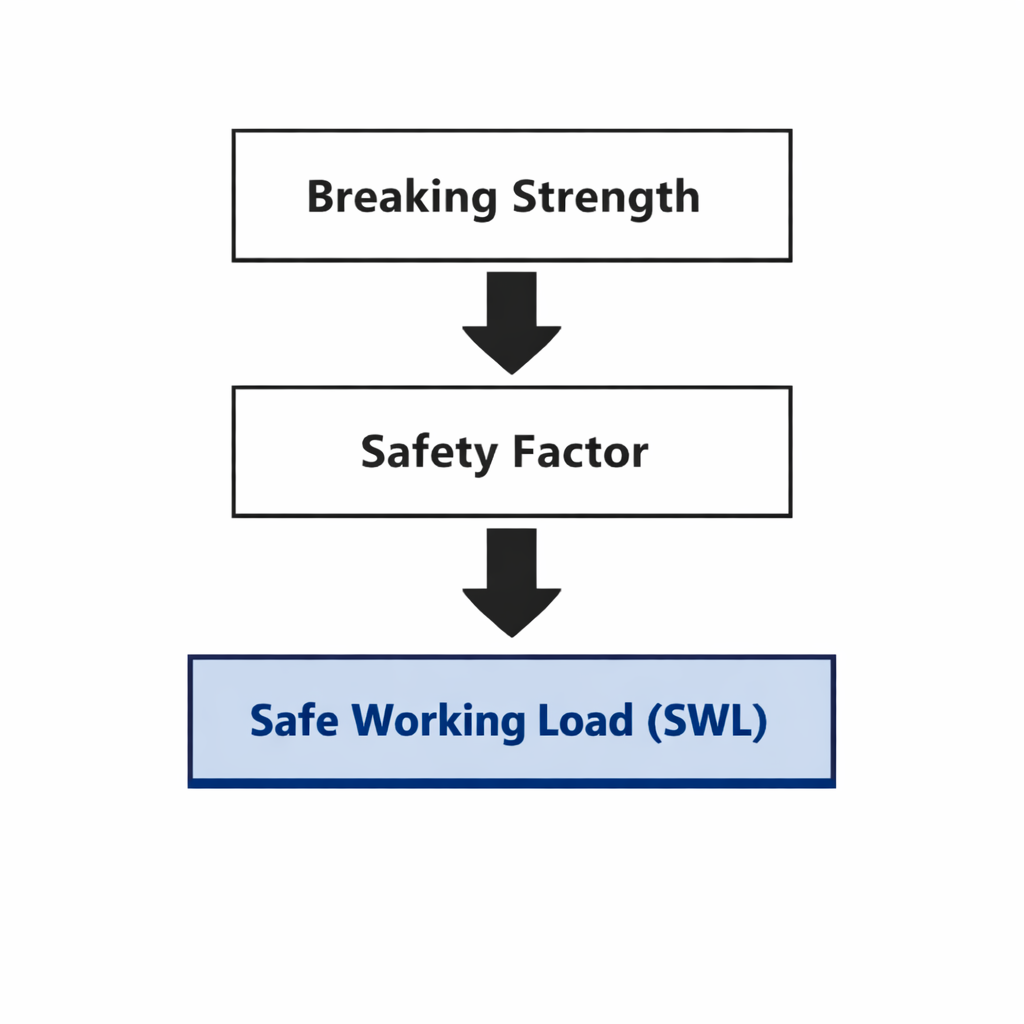
If breaking strength is 50 tons and the safety factor is 5, the Safe Working Load is 10 tons.
Why Safe Working Load matters in industrial operations
In industrial lifting and transport operations, knowing the exact load capacity of equipment is critical for both safety and efficiency. Safe Working Load is one of the most important safety parameters used in lifting, transport, and storage systems.
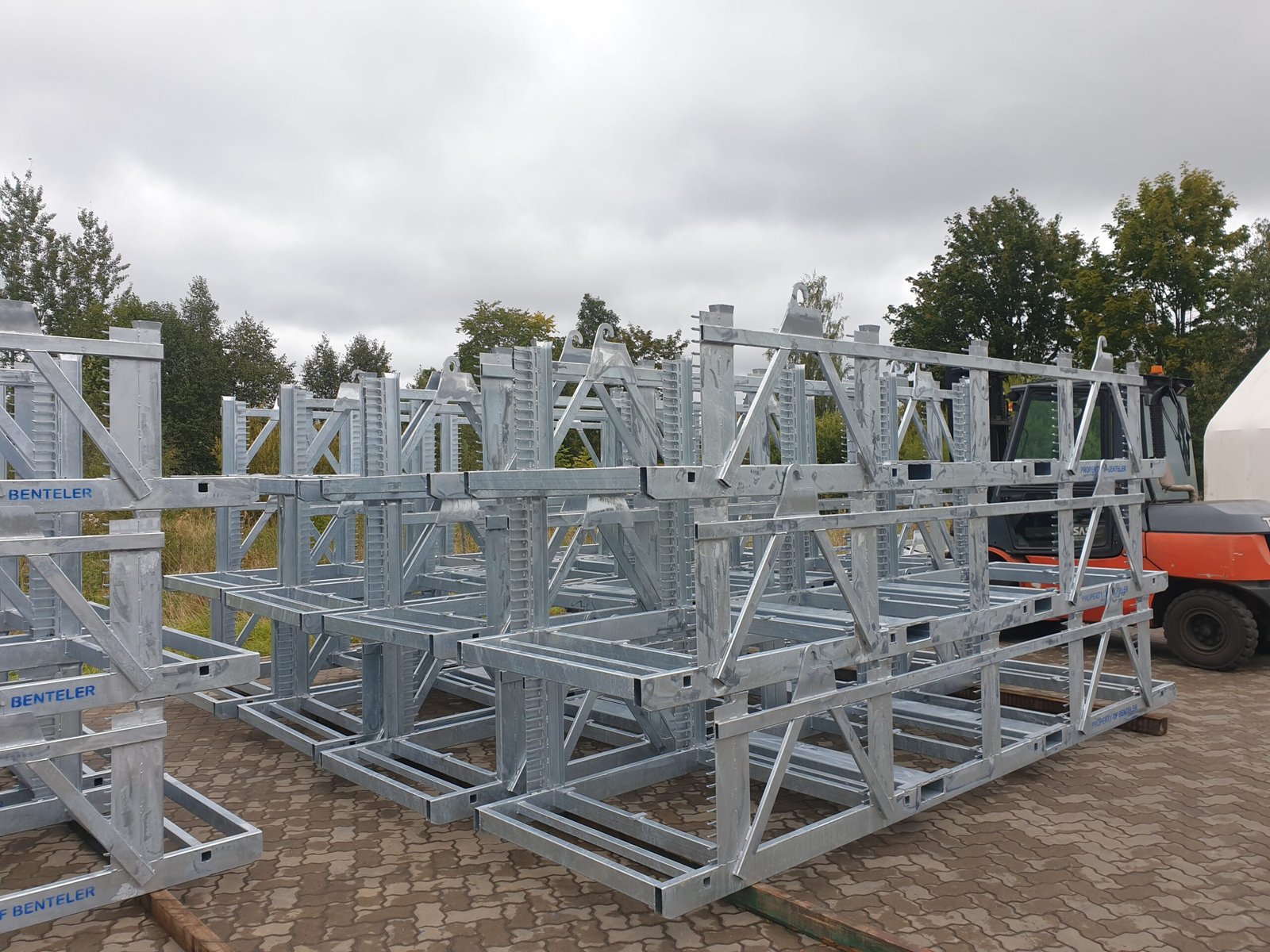
Whether a structure is lifted by a crane, moved by a forklift, or used to transport heavy components across a supply chain, its load limits should be clearly defined. In environments where steel transport frames, stillages, racks, pallets, and heavy-duty containers are used, the consequences of poor load design can include structural failure, equipment damage, product loss, or serious safety risks.
What is Safe Working Load (SWL)?
Safe Working Load (SWL) is the maximum load that a structure, lifting device, or handling system can safely support during normal operation. This limit is determined through engineering calculations and safety factors so that equipment performs reliably under real operating conditions.
In industrial environments, Safe Working Load may apply to equipment and structures such as:
- lifting frames;
- steel transport containers;
- stillages;
- heavy-duty storage racks;
- custom handling systems used in manufacturing or logistics.
For example, if a steel transport frame is rated for an SWL of 10 tons, it should never carry more than that during normal lifting, transport, or handling operations.
Why the structure’s actual strength is higher than its SWL
The physical strength of the equipment is normally higher than its Safe Working Load. Engineers intentionally create a safety margin so the rated working load remains well below the point where material failure could occur.
This safety margin helps account for factors such as:
- dynamic forces during lifting;
- uneven load distribution;
- material variations;
- real-world operating conditions.
A load rating is not only about how much weight a structure can hold in theory. It is about how safely it can perform in real industrial use.
How is Safe Working Load calculated?
Safe Working Load is commonly determined by applying a safety factor to the maximum load a structure could theoretically withstand.
Example:
- Breaking strength: 50 tons;
- Safety factor: 5;
- Safe Working Load: 10 tons.
This means the structure may withstand a higher load physically, but under normal use it should never be loaded beyond 10 tons.
Why safety factors are used
Safety factors provide a margin of protection against unexpected stresses such as dynamic movement, impact loading, or uneven force distribution. In practice, many lifting systems use safety factors between 5 and 7, while some structural steel applications may use lower values depending on design standards and operating conditions.
SWL vs WLL vs MRC vs Proof Load vs Safety Factor
These terms are related, but they do not all mean the same thing. Understanding the differences helps buyers, engineers, and operators work with the correct load data.
| Term | Meaning | Typical use | Main point |
|---|---|---|---|
| SWL | Safe Working Load | Structures, handling systems, lifting frames | Maximum safe load during normal operation |
| WLL | Working Load Limit | Chains, slings, shackles, hooks, lifting accessories | Often the modern preferred term for safe operating load |
| MRC | Maximum Rated Capacity | Manufacturer design specification | Design capacity, not always the same as normal safe operating load |
| Proof Load | Controlled test load above SWL | Testing and verification | Used to confirm structural strength without causing damage |
| Safety Factor | Engineering margin applied to determine safe use | Load calculations and design standards | Reduces permitted working load below theoretical failure limit |
SWL
SWL is the maximum load that equipment or a structure can safely support during normal operation. It is the value operators should not exceed during lifting, storing, or transporting materials.
WLL
Working Load Limit is closely related to SWL and is commonly used for lifting accessories such as chains, slings, shackles, and hooks. In many standards, WLL has replaced SWL as the preferred technical term.
MRC
Maximum Rated Capacity refers to the maximum load a structure or piece of equipment is designed to carry according to the manufacturer’s specifications. It often reflects design capacity rather than the day-to-day safe operational limit.
Proof Load
A Proof Load is a controlled test load applied during inspection or testing. It is intentionally higher than the Safe Working Load but remains below the level that would cause structural failure.
If you want to go deeper into how steel fabrications are actually verified in practice, continue with Safe Working Load Testing for Custom Steel Fabrications.
Safety Factor
The Safety Factor is the engineering margin used to define the safe working limit. It helps ensure the structure remains reliable when exposed to real operating forces.
Why Safe Working Load ratings matter for steel handling solutions
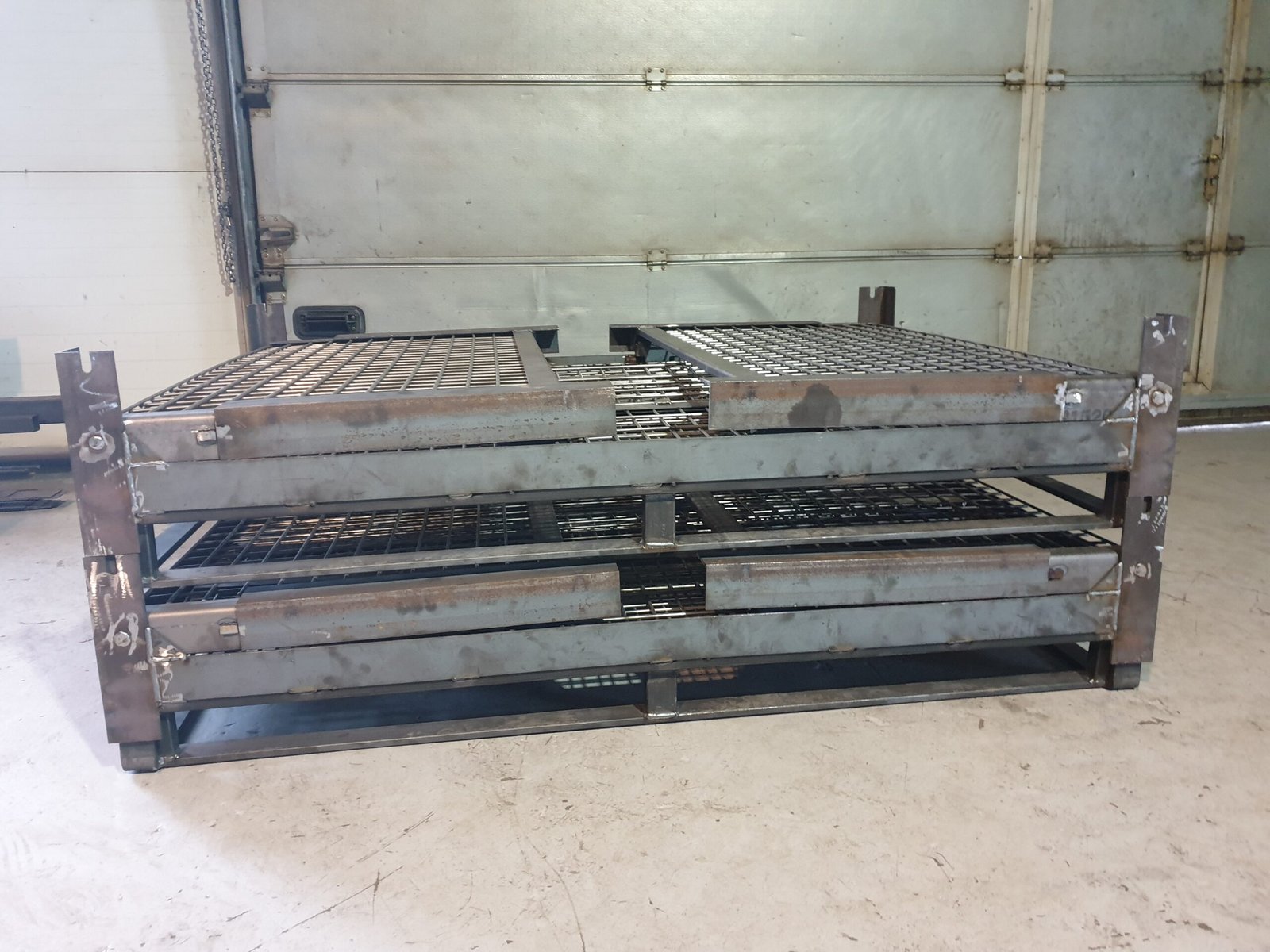
Steel handling structures such as stillages, transport frames, racks, pallets, and industrial containers are often lifted by forklifts or cranes. Because of this, their load capacity should be clearly defined and respected.
Without a properly defined Safe Working Load, operators may unknowingly overload a structure, increasing the risk of structural damage, instability, product loss, or workplace accidents.
What can happen when load limits are unclear
- structural deformation of load-bearing elements;
- weld fatigue or cracking caused by repeated overload;
- instability during lifting or transport;
- damage to the transported product;
- increased safety risks for operators.
Real forces acting on steel handling structures
The load on a steel structure is not always static. During real operation, several forces may affect performance:
- static loads from the product’s weight;
- dynamic loads during crane lifting or forklift movement;
- shock loads caused by sudden acceleration or braking;
- uneven load distribution inside stillages or containers;
- stacking loads when units are placed on top of each other.
Why custom steel handling solutions require careful load design
In many industrial applications, steel handling systems are custom-designed for the exact dimensions, weight, geometry, and logistics requirements of a specific product.
That means SWL cannot be copied from a generic catalog value. It needs to be determined according to the intended use of the structure.
Design parameters that affect Safe Working Load
- the weight and center of gravity of the product;
- the lifting method, such as forklift, crane, or both;
- the number and position of lifting points;
- transport conditions including vibration and impact;
- stacking requirements during storage or shipment.
When these factors are addressed at the design stage, the final solution is far more likely to perform safely and consistently throughout its service life.
What buyers should define before ordering custom steel handling solutions
1. What load will the structure carry?
The total product weight is the starting point, but it is not the only thing engineers need. Load distribution and the position of the center of gravity can significantly affect how forces act on the structure.
- What is the maximum product or component weight?
- Where is the center of gravity located?
- Will there be temporary overload conditions during handling?
2. How will the structure be handled?
The handling method directly influences the design of lifting points and load-bearing elements.
- forklifts;
- cranes;
- automated handling systems.
Crane lifting concentrates forces at lifting points, while forklift handling distributes loads through fork pockets and support frames. This should be defined before design starts.
3. What conditions will the structure operate in?
- indoor or outdoor operation;
- exposure to moisture, chemicals, or temperature changes;
- required corrosion protection;
- expected service life.
4. Is testing or verification required?
Some projects require more than calculations. Buyers may also need proof load testing or inspection by an independent certification body.
5. Will the structure be stacked or optimized for transport?
In many logistics applications, the steel structure also needs to improve storage density and transport efficiency.
- Will units be stacked in storage or transit?
- What stacking load must lower units withstand?
- Do units need to match standard transport dimensions?
- How efficiently should units nest or ship?
Planning a custom steel handling solution?
Share your project details, such as product weight, dimensions, lifting method, and operating environment, and an engineering team can evaluate the right Safe Working Load and structural concept for your application.
Accepted formats: DWG, DXF, STEP, PDF drawings, or simple sketches.
Safe Working Load (SWL) – Frequently Asked Questions
What is Safe Working Load (SWL)?
What is the difference between SWL and WLL?
What is Maximum Rated Capacity (MRC)?
How is Safe Working Load calculated?
What is Proof Load?
Can custom steel structures be tested or certified?
Conclusion
Safe Working Load is a fundamental part of safe lifting and steel handling design. Clearly defined load limits help ensure that structures such as stillages, transport frames, and containers perform reliably during lifting, transport, and storage.
By combining engineering calculations, safety factors, clearly defined operating conditions, and, where needed, physical testing, manufacturers can deliver steel handling solutions that are both safe and durable in industrial use.
For the next step in the process, continue with Safe Working Load Testing for Custom Steel Fabrications to see how simulation, prototype development, testing, and verification fit into the full engineering workflow.
Discuss your project with our engineering team
If you already have technical drawings or CAD files, sending them can speed up evaluation, feasibility review, and pricing feedback.
- product weight and dimensions;
- lifting method and transport conditions;
- stacking requirements;
- operating environment;
- drawings, CAD files, or sketches.