Steel Pallets vs Wooden Pallets: Performance, Cost and Durability Compared
Wooden pallets remain the default in many operations because they are cheap and familiar. That does not automatically make them the right long-term choice for heavy industrial use.
This guide compares steel pallets and wooden pallets across load capacity, lifespan, total cost of ownership, hygiene, handling, and customisation so industrial buyers can choose the right platform for the actual job, not just the lowest purchase price.
Wooden pallets wear out quickly in heavy industrial environments with repeated handling and moisture exposure.
Steel pallets and stillages normally remain in service much longer under comparable industrial conditions.
Typical wood ratings are lower, degrade with damage and moisture, and depend heavily on condition.
Custom steel platforms are engineered for a defined Safe Working Load and can be built for demanding stacking and transport needs.
Why this comparison matters for industrial buyers
In light-duty one-way shipping, wood often does the job well enough. In industrial production and logistics, the situation changes. Repeated forklift handling, high loads, stacking pressure, outdoor storage, and hygiene requirements all expose the limits of wood very quickly.
That is why more manufacturers replace standard wooden pallets with custom steel pallets, cage pallets, and stillages built around the actual product, the handling method, and the service environment.

Why wooden pallets are still the default and where they fall short
Wooden pallets dominate global logistics for straightforward reasons. They are easy to source, low-cost, and compatible with standard forklift systems. For light products, infrequent use, or non-returnable shipping loops, that is often enough.
The problems become obvious in industrial environments where pallets are handled repeatedly, carry heavy or concentrated loads, or sit in changing weather conditions. Under those conditions, wood has predictable failure modes.
- Moisture absorption weakens the structure and encourages mould, contamination, and pest issues.
- Splintering and broken boards create debris and reduce structural reliability.
- Degrading load capacity means the same pallet becomes less trustworthy over time.
- Replacement cycles quietly turn a cheap unit into a recurring operating expense.
Steel pallets vs wooden pallets head to head
The table below compares both options across the decision points that matter most in heavy-duty manufacturing, storage, and transport operations.
| Category | Steel pallets and stillages | Wooden pallets |
|---|---|---|
| Load capacity | Engineered to a defined Safe Working Load and stable across repeated handling cycles | Lower typical capacity, more dependent on condition, moisture, and damage history |
| Lifespan | Commonly 10 to 15 years with basic maintenance | Often 3 to 5 years in industrial use, sometimes less |
| Purchase cost | Higher upfront | Lower upfront |
| Total cost over time | Often lower in heavy-duty or long-term applications | Higher when replacement, repair, disposal, and downtime are counted |
| Hygiene | Cleanable, non-porous, no splinter risk | Absorbs moisture and can create contamination issues |
| Customisation | Fully custom dimensions, lifting points, stacking features, and finishes | Mostly standard sizes with limited adaptation |
| Stacking performance | Can be engineered for defined stacking loads | Less predictable under heavy stacking stress |
Load capacity and structural strength
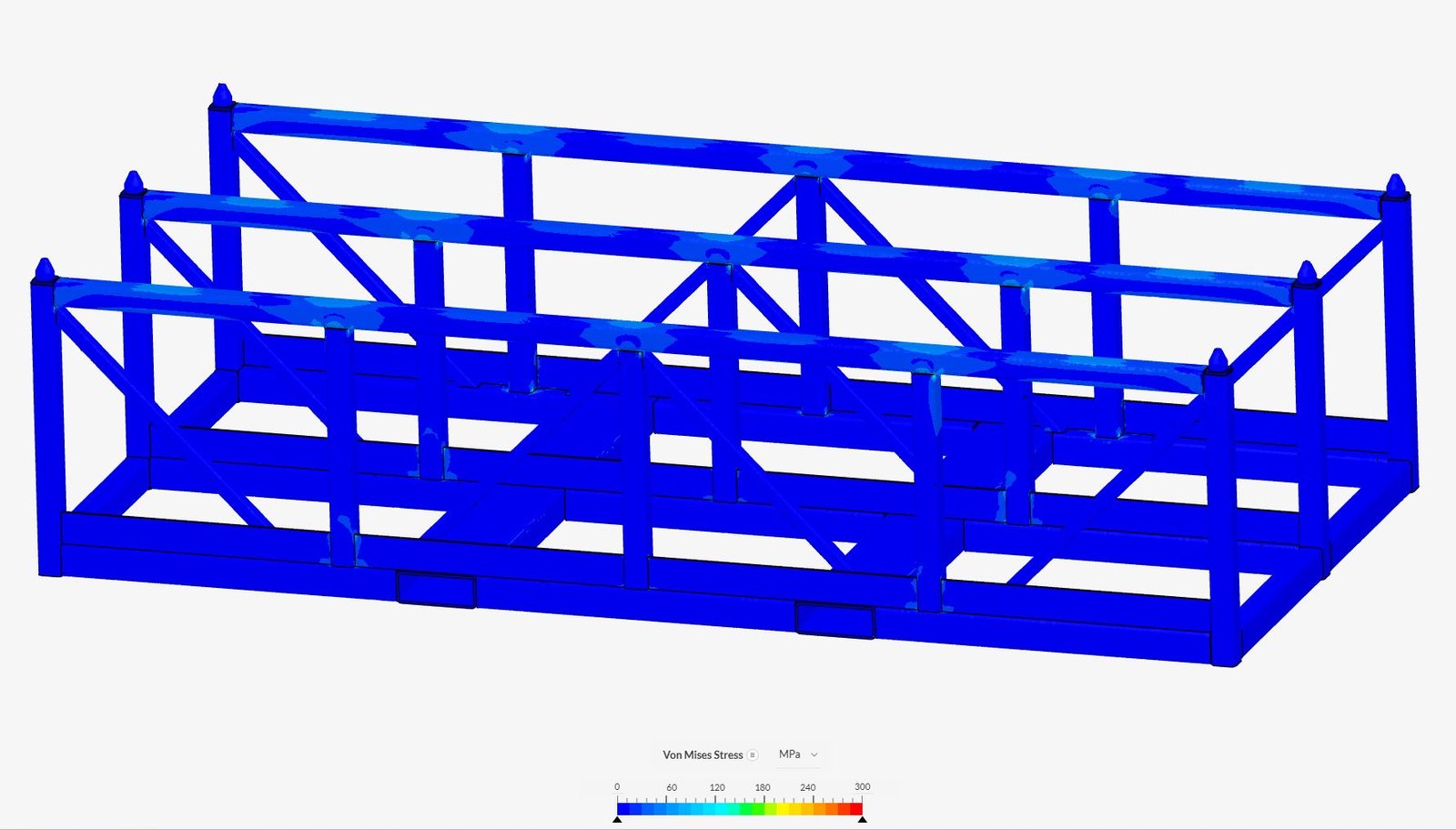
Steel pallets and stillages are designed around a specified load case. That means the load is known, the handling method is defined, and the structure is engineered to support that use repeatedly. Capacity can also be marked directly on the unit so operators work with a clear and consistent limit.
Wooden pallets are typically quoted with standard ratings, but those values assume the pallet is in good condition and used under favorable circumstances. Real industrial handling introduces impacts, uneven load distribution, and moisture-related degradation that can reduce practical performance over time.
For a deeper explanation of how rated load is established and what Safe Working Load means in practice, see Safe Working Load (SWL): Meaning, Formula, WLL vs SWL and Safety Factors.
Lifespan and total cost of ownership
Wood looks cheaper on day one. That is true. The mistake is stopping the comparison there. In industrial use, wooden pallets require replacement, repair, disposal, and operational workarounds much more often than steel units do.
Steel pallets and stillages cost more upfront, but they usually stay in service far longer. Once handling cycles are frequent and the operational timeline extends beyond a few years, the total cost calculation shifts sharply toward steel.
| Cost factor | Wood | Steel |
|---|---|---|
| Initial purchase | Lower | Higher |
| Replacement frequency | Higher | Lower |
| Repair burden | Frequent in heavy use | Usually limited to occasional maintenance |
| Downtime risk | Higher when pallets fail in operation | Lower when correctly engineered for the task |
In high-frequency industrial applications, the cheapest pallet to buy is often the most expensive pallet to keep replacing.
Hygiene, handling, and operational fit
Wood absorbs moisture and can splinter. In contamination-sensitive environments or operations where cleanliness and inspection matter, that is a weakness. Steel surfaces are easier to inspect and easier to clean, especially when the finish is selected for the environment.
Steel is heavier, which is the honest tradeoff. That additional weight should be accounted for at design stage, particularly where forklift capacity is close to the combined load. For heavy industrial products, however, pallet weight is usually a small fraction of the overall handled load and rarely the deciding factor.
Customisation and load compatibility
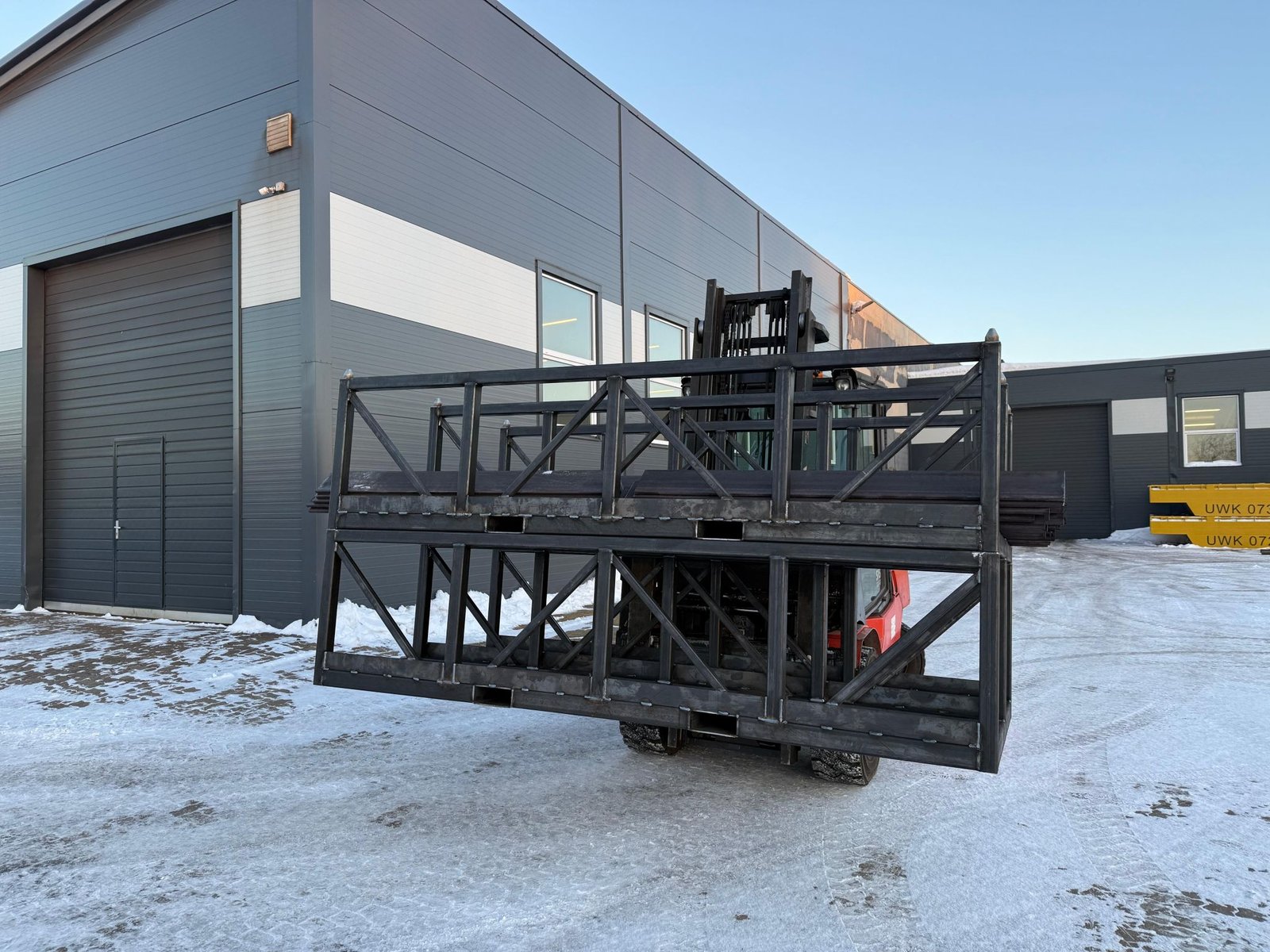
One of the biggest differences between steel and wood is how precisely the unit can be tailored to the product. Wooden pallets are generally standard. Steel pallets and stillages can be built to suit the exact footprint, center of gravity, lifting method, stacking pattern, and transport constraints of the part they carry.
- exact dimensions matched to the product footprint;
- fork pocket spacing matched to the handling equipment on site;
- lifting points for crane handling where required;
- stacking features engineered for defined loads;
- surface finish chosen for indoor, outdoor, or corrosive environments.
When wood still makes sense
Steel is not automatically the right answer for every application. Wooden pallets remain practical in a few specific cases.
- single-use or low-return shipping loops;
- light loads in controlled indoor environments;
- short project timelines where long-term replacement cost is less relevant;
- operations where hygiene, stacking, and custom fit are not critical.
The correct decision is always tied to the actual load, frequency of handling, service environment, and expected operating period.
When steel pallets and stillages are the right choice
Steel becomes the stronger option when the product is heavy, the pallet is reused often, or the consequences of failure are expensive. This is why steel handling platforms are common in automotive, heavy machinery, metal processing, and industrial logistics operations.
- loads from several hundred kilograms to multiple tonnes;
- repeated handling by forklift, crane, or both;
- defined stacking requirements in storage or transport;
- non-standard product geometry or unstable load distribution;
- long service life where replacement cycles matter;
- environments where hygiene, corrosion protection, or traceability are important.
What to define before ordering a custom steel pallet or stillage
The clearer the requirements, the faster engineers can move from concept to quotation and production. For custom steel handling equipment, the following details matter early.
- maximum product weight and center of gravity;
- forklift handling, crane lifting, or both;
- stacking height and stacking load requirements;
- indoor, outdoor, or corrosive environment;
- required finish such as paint, powder coating, or galvanizing;
- whether load testing, calculations, or third-party verification will be required.
For a full breakdown of how load capacity is verified for custom fabrications, see Safe Working Load Testing for Custom Steel Fabrications.
Frequently asked questions about steel pallets vs wooden pallets
Are steel pallets worth the higher upfront cost?
How long do steel pallets last compared with wooden pallets?
Can a steel pallet be made for a non-standard product?
Do steel pallets need load testing?
What finish is best for steel pallets used outdoors?
Conclusion
The decision between steel pallets and wooden pallets is really a decision about operational fit. Wood remains practical for light-duty, short-term, or one-way applications. Steel is usually the better answer when load, handling frequency, service life, hygiene, or custom geometry put real pressure on the platform.
For industrial buyers, the right question is not only what the pallet costs to buy. The better question is what it costs to keep using safely over the next several years.
Need a structural recommendation for your application?
Send the product weight, dimensions, lifting method, stacking requirements, and operating environment. That is enough to start evaluating whether a steel pallet, stillage, or transport frame is the right fit.