
When Collapsible Gitterboxes and Stillages Are Better: Return Logistics, Storage Density and Safer Handling
Collapsible gitterboxes and stillages are not automatically the right answer for every product. But where empty return transport, warehouse density, or flexible space usage matter, they can outperform fixed frames, standard pallets, and one-way packaging by a wide margin.
This guide explains when collapsible steel handling units are the better solution, what tradeoffs they involve, and which industrial applications benefit most from foldable designs.
Collapsible designs reduce cube during return transport and cut the cost of moving empty units back into the loop.
Folded units free up floor area when demand is uneven or seasonal and storage space is limited.
They perform best where the same units circulate repeatedly between supplier, plant, warehouse, and customer.
Folding mechanisms, hinges, and locking points add design constraints that fixed frames do not have.
Why collapsible steel units exist in the first place
Fixed stillages, gitterboxes, and pallet frames are simple, durable, and often the best choice when units stay loaded most of the time. The problem appears when they travel empty. A rigid steel unit takes up almost the same transport volume whether it contains parts or nothing at all. In closed-loop logistics, that can become a major cost driver.
Collapsible gitterboxes and stillages were developed to solve exactly that problem. When folded, they occupy much less cubic space in storage and in return transport, which means more units per truck, less floor-space waste, and a more flexible warehouse layout.
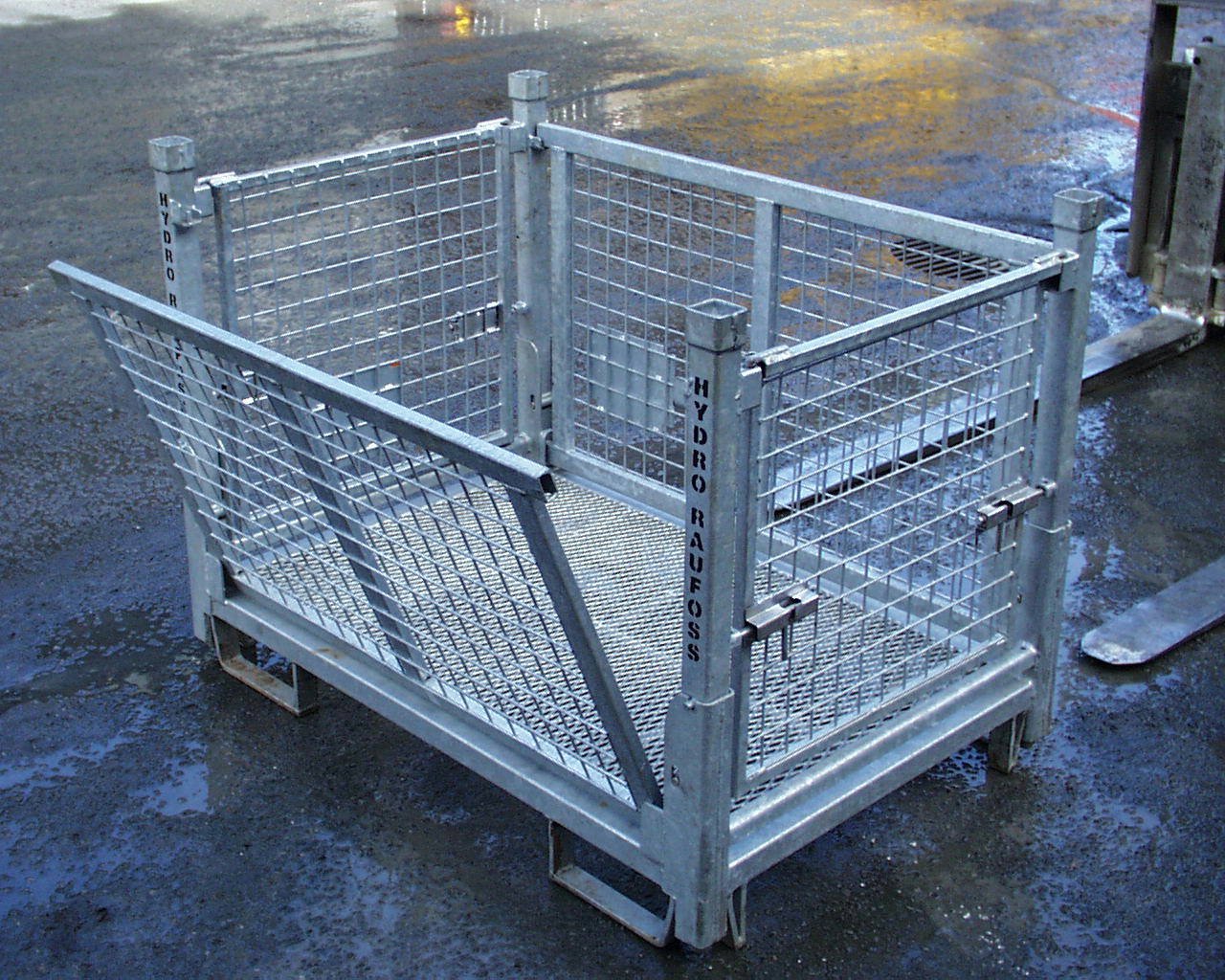
When collapsible gitterboxes and stillages are better than fixed units
Collapsible designs are not stronger by default. They are better when their operational advantages outweigh the added complexity of hinges, locking points, or folding walls. In practice, that usually happens in logistics systems with high empty-unit circulation or sharp demand swings.
The strongest reasons to choose collapsible units
- Empty units travel long distances back to the supplier, making return cube expensive.
- Storage demand fluctuates, so empty containers need to be stored compactly between cycles.
- Warehouse space is constrained, and empty fixed frames take up too much floor area.
- Handling loops are repetitive, so folding and unfolding is a controlled routine, not an exceptional task.
- The product does not require a permanently rigid enclosure when the unit is empty.
Where none of these conditions apply, fixed units are often simpler and may last longer with less maintenance. But once empty handling becomes a real cost, collapsible designs become much more attractive.
Return logistics: the biggest reason collapsible units win
In many European industrial supply chains, the real pain point is not outbound transport of loaded units. It is inbound transport of empties. If a truck returns with mostly air because the stillages cannot fold, the packaging design is no longer only a handling decision. It becomes a transport-cost decision.
Collapsible gitterboxes and stillages reduce the footprint of empty returns. That improves truck fill on the reverse leg and reduces how much warehouse space is consumed by units waiting to be reused.
| Scenario | Fixed unit | Collapsible unit |
|---|---|---|
| Outbound loaded transport | Often similar if both protect the product well | Often similar if both protect the product well |
| Empty return transport | Poor cubic efficiency | Much better cubic efficiency when folded |
| Storage of empty units | High space consumption | Lower footprint and better stack density |
| Operational flexibility | Simple, but space hungry | More adaptable where demand changes |
This is why collapsible stillages are common in return-logistics systems serving automotive parts, stamped components, profile-based products, and subassemblies that move repeatedly between plants and suppliers.
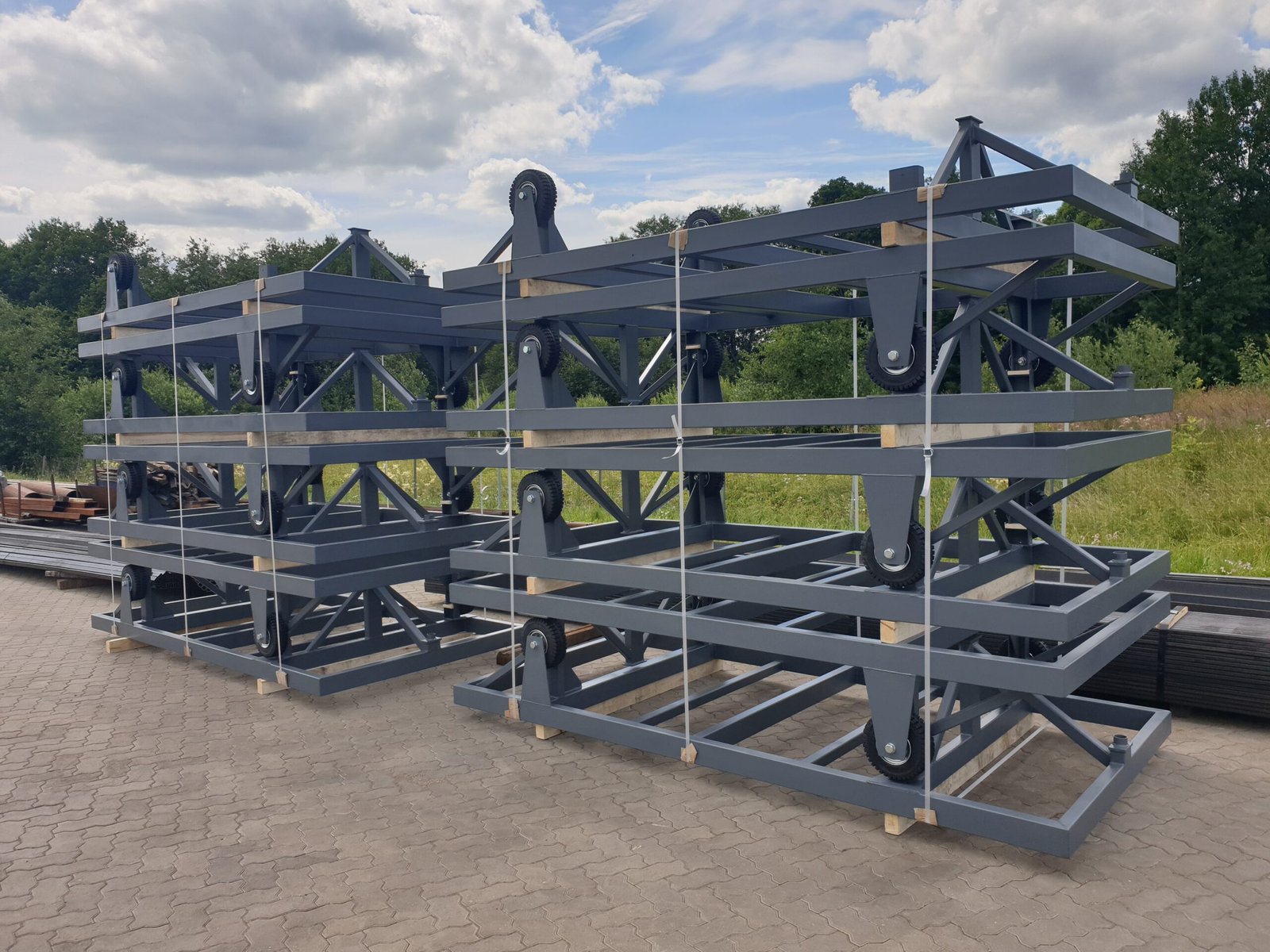
Warehouse density and floor-space flexibility
Even when transport is not the main driver, collapsible units can still make sense because of the way they change warehouse space usage. Many operations have uneven order profiles or seasonal peaks. During one period, they need every unit loaded and in circulation. During another, dozens or hundreds of empty containers sit idle.
Fixed stillages keep occupying the same footprint. Collapsible units give the warehouse back some of that space. In practical terms, this can reduce pressure on aisles, overflow areas, and outside storage zones.
Where foldable units help most in storage
- plants with many reusable handling units waiting between production cycles;
- third-party logistics providers managing multiple customer loops;
- operations that need to clear space quickly for changing production priorities;
- yards where outdoor storage of empty units should be minimized.
The value is not only in more units per square meter. It is also in how quickly the operation can switch space from “packaging storage” back to “productive storage.”
Collapsible packaging earns its keep when empty space has a real cost. If empty frames are cheap to store and cheap to return, the folding feature matters less.
Which products fit collapsible gitterboxes and stillages well
Not every product is a good candidate. The best fit is usually a product that needs reusable steel protection and stable handling during the loaded leg, but does not require the empty unit to remain rigid all the time.
- medium-weight industrial parts that move repeatedly in returnable loops;
- stamped and machined metal components with repeatable pack patterns;
- weldments, brackets, and fabricated parts that can be nested or separated;
- profile-based products and assemblies with defined support points;
- service parts and aftermarket components where warehouse cube matters.
By contrast, very high-load applications, extremely fragile shapes, or structures needing permanent rigidity for stacking may still favor fixed frames. Foldability helps with logistics, but it should not compromise loaded stability, access, or defined Safe Working Load.
The tradeoffs: when fixed stillages are still better
A collapsible design introduces moving parts, hinges, locks, side panels, and wear points. That means engineering has to be more careful. The unit needs to fold easily enough for the operator but still remain rigid and safe in service. It also needs to resist misuse, because real operations do not always treat folding mechanisms gently.
Fixed stillages may still be the better choice when:
- loaded strength and long-term rigidity matter more than return-space savings;
- the unit rarely travels empty or spends little time in storage;
- the product is so heavy that folding geometry becomes a weak point;
- the operation wants the fewest possible moving parts and lowest maintenance burden;
- stacking loads are high and permanent frame stiffness is the priority.
That is why the design decision should not be “foldable is better.” The real question is whether the operational savings justify the extra complexity.
What buyers should define before ordering collapsible units
- loaded product weight and actual handling method;
- required stacking conditions when loaded and when empty;
- how often units travel empty and over what distance;
- folded dimensions needed for warehouse or trailer efficiency;
- how operators will lock, unlock, fold, and reopen the unit in daily use;
- whether return loops are closed, semi-closed, or mixed across sites.
These details determine whether collapsibility creates measurable value or just adds complication. The structure itself should still be engineered for the real load case. If the unit is lifted, stacked, or highly loaded, the same Safe Working Load logic discussed in GorillaBasket’s SWL articles still applies.
For related reading, see Safe Working Load and SWL Testing for Custom Steel Fabrications.
The economics: when the folding feature pays for itself
In real operations, buyers do not choose collapsible steel packaging because folding is visually impressive. They choose it because the folding feature solves a cost problem elsewhere in the system. That cost may sit in return transport, in warehouse occupancy, in outsourced storage, or in the labor needed to control large volumes of empty units between cycles.
Consider a supplier that ships full stillages every day and receives the same empties back in a closed loop. The outbound move may look almost identical whether the unit is fixed or collapsible. The difference appears when those empties return. If folded units allow far more empties per trailer, the transport saving becomes measurable. If the folded stacks also reduce warehouse footprint, the same decision can improve both transport economics and storage economics at the same time.
- More empty units returned per truck movement
- Less floor area consumed by idle packaging
- Lower pressure on overflow storage during seasonal changes
- Better utilization of yard, trailer, and warehouse cube
- Less need to buy additional packaging simply because empties cannot be stored efficiently
These gains are strongest in repetitive, higher-volume return loops. In low-volume operations the folding feature may be useful, but the savings may not be large enough to justify the extra complexity. That is why the correct comparison is never just unit price versus unit price. It is loop cost versus loop cost.
Operational safety: foldability should never create handling uncertainty
A collapsible unit is only better if operators can use it safely and repeatably. Folding walls, locks, hinges, and moving sides must be obvious in use. If locks are hard to see, if sidewalls can shift unexpectedly, or if folded stacks become unstable during movement, the design introduces new handling risk instead of reducing old logistics cost.
For that reason, good collapsible stillages are engineered around operator behavior as well as structural strength. Buyers should ask whether one person can fold the unit safely, whether lock positions are easy to verify, whether there are pinch points during closing, and whether the folded geometry stays stable in empty transport and stacked storage. Because reusable packaging is handled over and over again, even a small usability flaw becomes an operational problem very quickly if it is repeated every day across the full loop.
Frequently asked questions about collapsible gitterboxes and stillages
When are collapsible stillages better than fixed ones?
Do collapsible steel units save transport cost?
Are collapsible gitterboxes weaker than fixed gitterboxes?
Which products fit collapsible units best?
When should I avoid a collapsible design?
Conclusion
Collapsible gitterboxes and stillages are better when empty space has a real operational cost. They make the most sense in returnable systems where empty transport, storage density, and warehouse flexibility matter enough to justify the added design complexity.
Where those conditions are weak, fixed units still win on simplicity. Where those conditions are strong, foldable steel units can reduce cost, improve flow, and make better use of logistics space across the whole packaging loop.
Need a collapsible steel handling solution?
Send the product weight, pack pattern, loaded stack requirement, and return-loop conditions. GorillaBasket can evaluate whether a collapsible gitterbox, foldable stillage, or fixed unit is the better fit.