Why Industrial Buyers Choose Steel Pallets Instead of Wood
Wooden pallets are cheap to buy, which is exactly why they stay in so many operations long after they stop making economic sense. Once loads get heavier, handling gets rougher, products become more valuable, or reuse cycles increase, wood often turns into a false economy.
This guide explains why serious industrial buyers move from wood to steel pallets and stillages, and when the higher purchase price of steel is justified by longer life, lower damage risk, and better handling performance.
Boards crack, nails loosen, pallets absorb moisture, and performance drops as soon as the pallet starts aging.
Steel gives a defined structure, repeatable geometry, and a more reliable Safe Working Load in real industrial use.
The relevant number is not purchase price alone. It is how many safe, productive cycles the pallet gives you.
If the product is heavy, valuable, awkward, or reused often, steel usually becomes the more defensible choice.
Why wood stays popular even when it should not
Wood is familiar. Buyers know roughly what it costs, warehouses already have it, and it feels like the safe default. The problem is that default choices are not always efficient choices. In industrial operations, wooden pallets are often selected because they are cheap to buy, not because they are strong enough, durable enough, or consistent enough for the actual job.
That logic breaks down fast when the pallet is reused heavily. A low purchase price does not help much if the pallet cracks, sheds boards, damages product, or needs replacement after a relatively short service life. For light-duty one-way shipping, that may be acceptable. For repeat industrial handling, it usually is not.

Why buyers switch to steel pallets instead of wood
The strongest case for steel is not fashion and it is not marketing. It is performance. Buyers change to steel when they get tired of paying repeatedly for the same weaknesses in wood.
- Higher load capacity: steel pallets can be engineered for loads that would quickly overstress or destabilize wood.
- Longer service life: steel survives repeat forklift handling, stacking, and yard use far better in demanding conditions.
- Better product protection: steel geometry can be tailored with guides, stops, buffers, and contact points around the real product.
- More predictable handling: steel does not change performance the same way wood does when it gets wet, damaged, or repaired badly.
- Cleaner and more hygienic use: steel is easier to clean and easier to control in sectors where dust, moisture, or contamination matter.
- Stronger fit for automation or repeat flow: consistent geometry matters when pallets must work with the same handling routine every time.
This is why steel is so common in serious industrial return loops, heavy-component handling, and custom storage systems. Once the operation depends on the pallet, the pallet itself needs to stop being the weak point.
Load capacity, stacking, and handling safety
A wooden pallet can be adequate for modest loads, but it is rarely the best answer when the buyer needs high, repeatable load capacity with clear stacking behavior. Wood degrades with age, impact, moisture, and repairs. That makes its real in-service performance less predictable over time.
Steel is stronger not only because the material is stronger, but because the pallet can be engineered around the actual load case. That matters if the pallet must stack, support a high point load, resist twisting, or work safely in a repeated forklift environment. It also matters when the product itself is too valuable to risk on a platform that slowly becomes weaker in use.
| Buyer concern | Wood pallet | Steel pallet |
|---|---|---|
| Heavy load handling | Limited and condition-dependent | Can be engineered for defined higher loads |
| Repeat forklift impact | Boards and joints degrade over time | More robust under repeated industrial handling |
| Stacking confidence | Varies with condition and pallet quality | Better structural predictability |
| Safe Working Load logic | Less defined in custom use cases | Can be specified, engineered, and verified |
If the operation depends on confident stacking and repeat handling, steel is usually the more defensible choice.
Why steel often wins on total cost even when it loses on upfront price
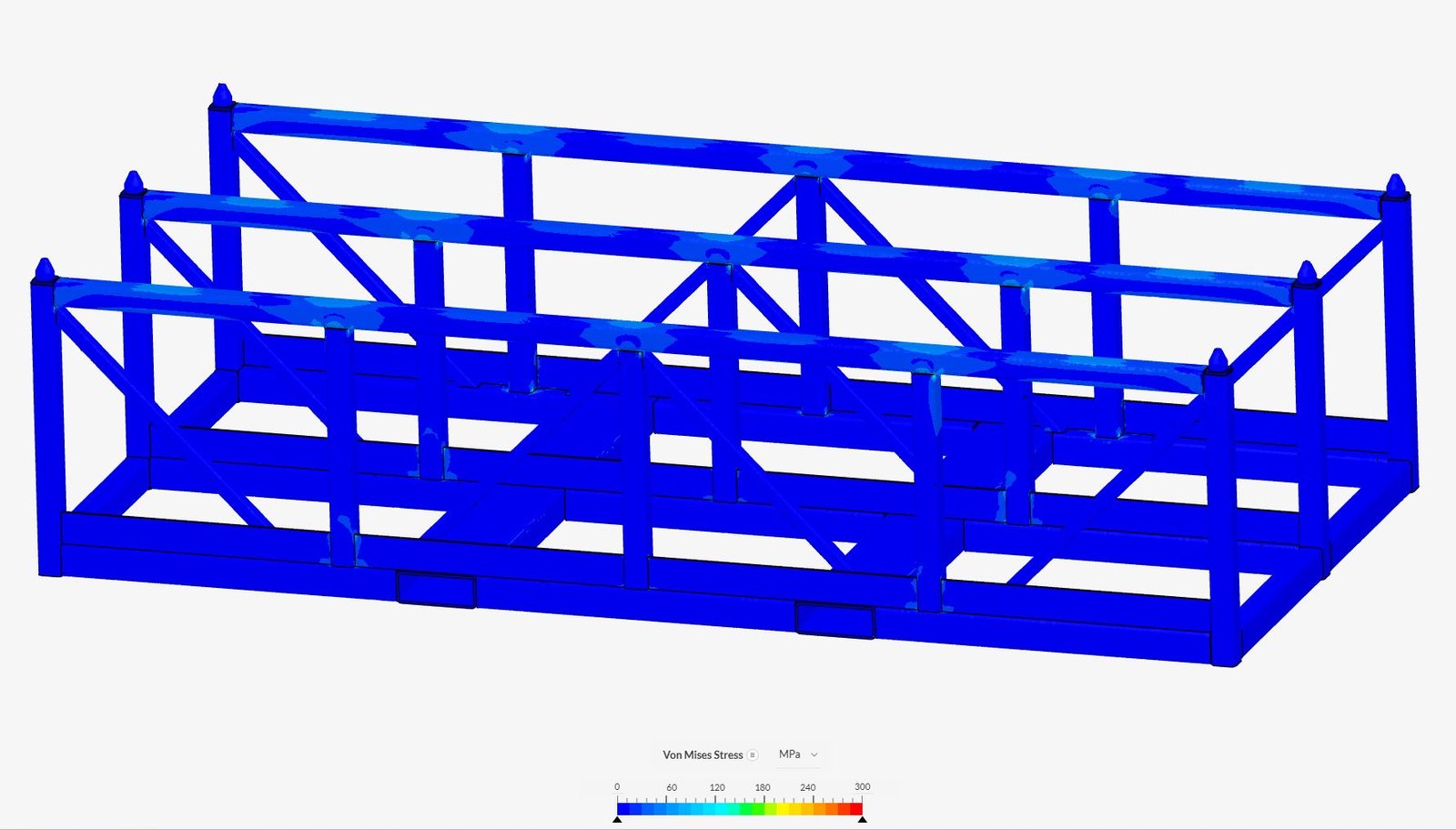
This is the part buyers often miss. Steel pallets usually cost more to buy. But if the pallet is reused often enough, the relevant comparison becomes cost per cycle, not cost per unit. A wooden pallet that needs frequent replacement, causes product damage, or creates downtime is not actually cheap. It just hides the cost in other places.
Steel can justify itself financially through a combination of longer life, lower breakage, better stack stability, and reduced need for replacement. If the pallet also improves handling speed or allows better integration with storage and transport, the economics improve further.
Wood is cheaper to buy. Steel is often cheaper to keep using.
This is especially true when the pallet carries heavy components, repeatable industrial loads, or products valuable enough that one damage event costs more than the price difference between wood and steel.
Product protection, cleanliness, and export practicality
Steel is also easier to justify when product protection matters. A custom steel pallet can incorporate locating points, separators, side restraint, and buffers in a way that a basic wood pallet cannot. That matters when the product is painted, machined, fragile, or dimensionally sensitive.
There is also a practical export point. The International Plant Protection Convention’s ISPM 15 rules apply to wood packaging material made of raw wood used in international trade. That means wood packaging often needs treatment and marking compliance for export use. Steel does not create that same issue. For some buyers, that is not the main reason to switch. For others, especially cross-border industrial loops, it removes one more point of friction.
- steel does not splinter like wood;
- steel does not absorb moisture the same way wood does;
- steel is easier to clean and inspect visually;
- steel can be built around the product instead of forcing the product onto a flat deck.
When wood still makes sense, and when it clearly does not
Wood still makes sense for light-duty, low-value, one-way, or low-cycle logistics where replacement cost is acceptable and the load is not especially demanding. There is no reason to pretend wood has no place. It does.
But wood stops making sense when:
- the load is heavy enough that structural confidence matters;
- the pallet is reused frequently over a long period;
- the product is valuable or easy to damage;
- the pallet must stack with confidence;
- the environment is wet, rough, or operationally demanding;
- the buyer needs a custom geometry rather than a generic flat pallet.
Once any of those are true, steel stops looking like the expensive option and starts looking like the sensible one.
How to justify steel pallets internally before buying
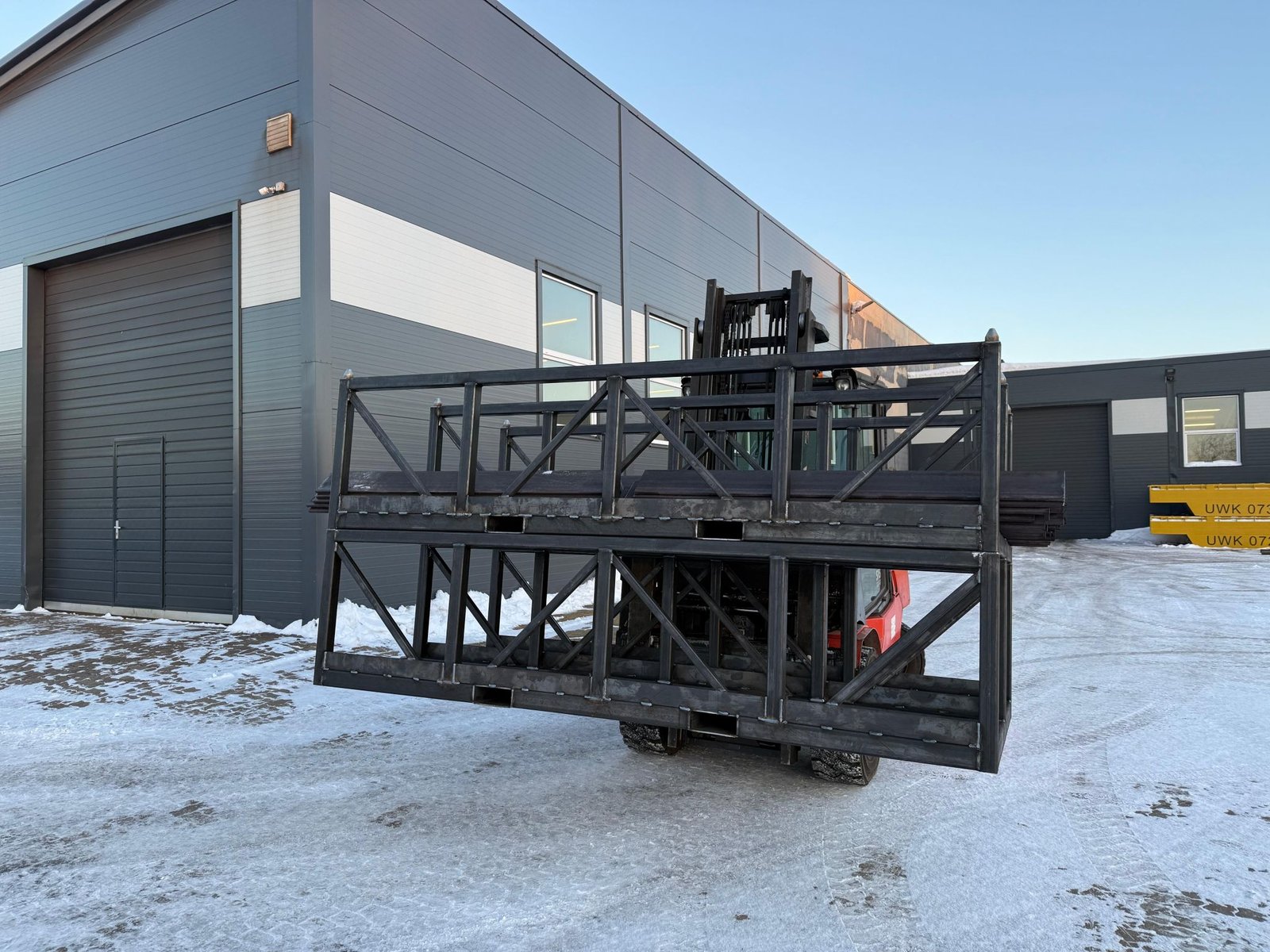
If you need to convince procurement or operations internally, do not argue from material preference. Argue from measurable problems. Look at pallet breakage, replacement frequency, damage events, unstable stacking, forklift issues, export constraints, and the value of the product sitting on the pallet.
Steel becomes easier to approve when you show:
- how many wood pallets are replaced each year;
- how often pallets fail under load or in stacking;
- how much product damage or handling delay is tied to weak platforms;
- how long a steel unit is likely to stay in service by comparison;
- whether a custom steel pallet could solve both storage and transport problems in one design.
For related reading, see Safe Working Load (SWL): Meaning, Formula, WLL vs SWL and Safety Factors, When to Choose Custom Steel Solutions Instead of Standard Racking Systems, and How to Prepare Technical Information Before Requesting a Quote for Custom Steel Fabrication.
Frequently asked questions about steel pallets instead of wood
Why should I use steel pallets instead of wood?
Are steel pallets always better than wood?
Are steel pallets more expensive?
What is the biggest practical advantage of steel?
Can steel pallets be custom-built for a specific product?
Conclusion
Industrial buyers choose steel pallets instead of wood when the pallet is no longer a disposable accessory. Once the platform affects safety, damage risk, stack stability, or total operating cost, steel usually becomes the stronger long-term decision.
If the job is light, cheap, and one-way, wood can still be fine. If the job is heavy, valuable, repetitive, or demanding, steel is usually the smarter buy.
Need a steel pallet or stillage that outperforms wood in real use?
Send the load weight, product dimensions, handling method, and stack requirement. GorillaBasket can propose a steel pallet or stillage built around the actual job instead of a generic timber platform.