Why Safe Working Load testing matters for steel fabrications
Heavy industrial products are moved through production, storage, and transport using custom steel stillages, lifting frames, and transport containers that may carry anything from hundreds of kilograms to multiple tonnes. In that context, load capacity should never be treated as an estimate.
For custom steel fabrications, a credible Safe Working Load comes from engineering design, structural analysis, controlled fabrication, and, when the project requires it, verification through testing or inspection. The structure can only be trusted if the rated load matches the way it will actually be lifted, moved, stacked, and reused in service.
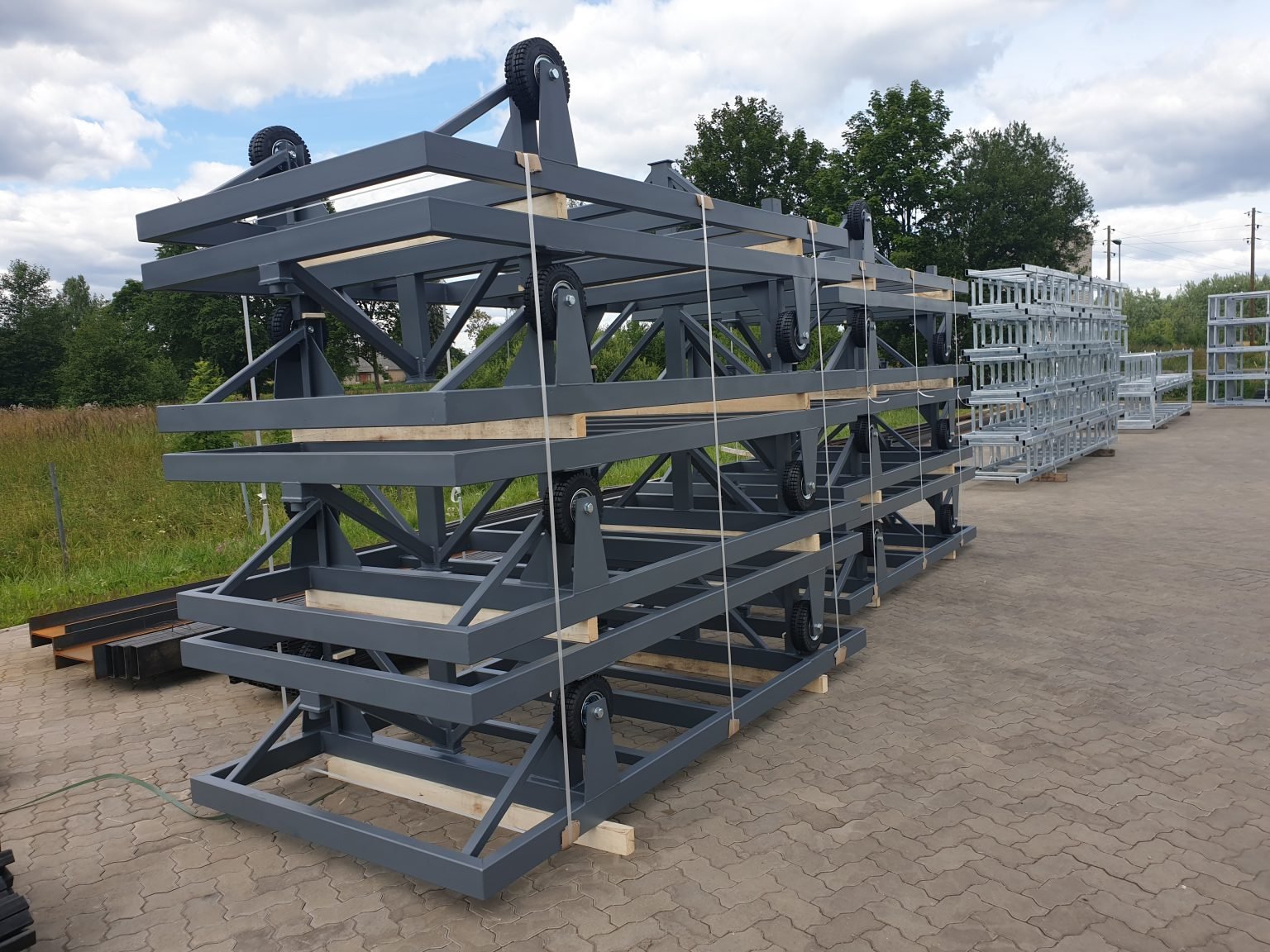
Engineering Process: Design, ISO 3834 Fabrication Control, and Proof Load Testing
Determining the Safe Working Load of a custom steel structure requires a structured engineering process. For steel stillages, lifting frames, and transport containers, engineers need to understand how the unit will behave under the real forces introduced by lifting, forklift handling, stacking, transport vibration, and long-term use.
In lifting applications, safety factors are commonly used when defining Safe Working Load. The exact factor depends on the type of structure, the applicable design standard, and the operating conditions. What matters is that the rated working load stays well below the level at which structural failure could begin.
| Stage | What engineers evaluate | Why it matters |
|---|---|---|
| Design requirements | Load weight, center of gravity, lifting method, transport conditions, stacking requirements | Defines the real forces acting on the structure |
| Structural analysis | Load paths, steel profiles, plate thicknesses, lifting points, frame stability | Shows whether the design can safely resist expected loads |
| Fabrication control | Welding quality, dimensional accuracy, material consistency, fixture control | Design strength only matters if fabrication quality supports it |
| Testing and verification | Prototype review, proof load testing, deformation checks, third-party inspection | Confirms that rated SWL reflects real structural behaviour |
Defining the design requirements
The first step in Safe Working Load verification is understanding exactly how the structure will be used. Engineers need more than a target weight. They also need to know how the load is distributed, how it will be handled, and what environment the structure will see during its service life.
- the total product weight and the location of the center of gravity;
- whether the unit will be handled by forklift, crane, or both;
- whether the structure will be stacked in storage or transport;
- exposure to moisture, outdoor conditions, chemicals, or impact loading;
- whether testing, documentation, or third-party verification will be required.
When this information is incomplete, the result is usually overdesign, underdesign, or unnecessary revision after the structure is already in production.
Structural design and engineering analysis
Once the requirements are clear, engineers develop the structural concept and evaluate how forces move through the steel frame. This often includes checking support points, lifting lugs, fork pockets, local plate stresses, weld zones, and the way the frame behaves under combined loading conditions.
Simulation tools can help identify stress concentrations before any steel is cut. That reduces risk early in the process and helps refine the design before fabrication begins.
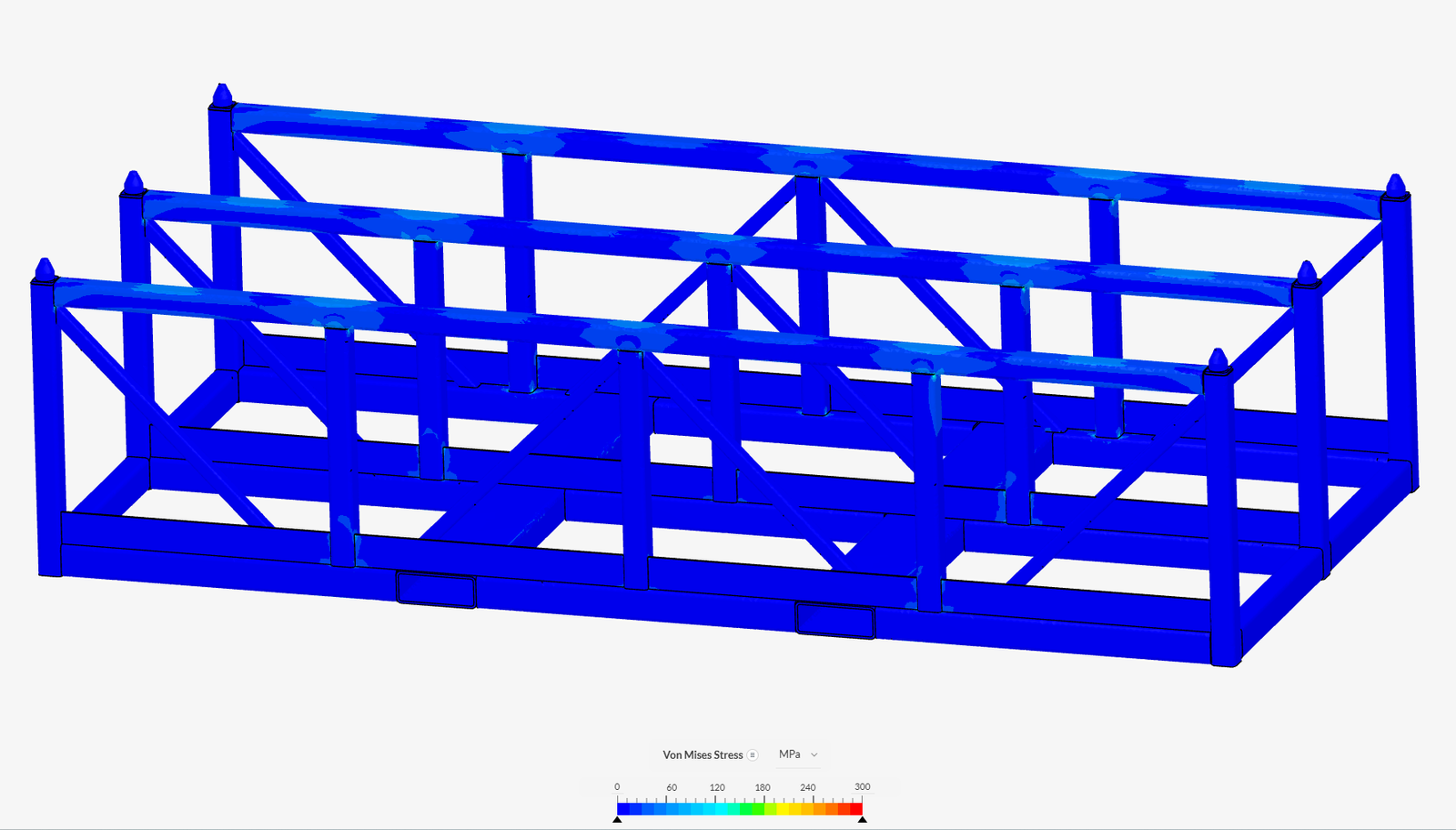
In many projects, this stage is where engineering decisions have the biggest effect on long-term performance. A strong design reduces deformation, improves stability during lifting, and keeps loads moving through the frame in a controlled way.
Fabrication and prototype development
Even the best structural model has little value if the fabrication process is inconsistent. For that reason, Safe Working Load verification depends heavily on controlled manufacturing. Material specification, weld quality, dimensional tolerances, and assembly sequence all affect how closely the finished structure matches the design intent.
For custom units, prototype development is often the point where theory meets practice. The first fabricated unit allows engineers and the customer to review fit, handling geometry, access, stackability, and whether the structure behaves as expected under its intended use.
If adjustments are needed, it is far more efficient to make them at prototype stage than after a full production batch has been completed.
Verification through proof load testing
Not every custom steel fabrication requires physical testing, but where the risk profile is high, proof load testing provides the most direct confirmation that the structure performs as intended. This is standard practice for lifting frames, heavy-duty stillages, transport frames, and units carrying high-value or safety-critical products.
Proof load testing applies a controlled overload above the rated Safe Working Load while the structure is monitored for deformation, instability, or local overstress. The load applied is typically 1.25× to 1.5× the rated SWL — so a structure with a 10-tonne safe working load would be tested under 12.5 to 15 tonnes under controlled conditions. The goal is not to fail the structure. It is to confirm that a defined safety margin above normal operating load can be tolerated without permanent damage.
Engineers assess the following during and after testing:
- excessive deformation of structural elements;
- instability during lifting or handling;
- stress concentrations near lifting points or load-bearing zones;
- visible signs of weld stress or structural distortion.
A credible Safe Working Load is the result of design logic, manufacturing control, and verification that matches the real use of the structure.
Need a tested steel fabrication for heavy industrial handling?
Share the load data, lifting method, operating environment, and drawing files for your project. That makes it easier to determine the right structural concept, the right Safe Working Load, and whether prototype evaluation or proof load testing should be part of the scope.
Accepted formats: DWG, DXF, STEP, PDF drawings, or simple sketches.
Third-party verification and independent inspection
Some projects require more than internal engineering approval. Customers may ask for independent verification of design calculations, proof load procedures, or fabrication quality before the structure is released for use.
For custom steel stillages, lifting frames, and transport containers, third-party inspection can add confidence where projects involve heavy loads, high-value products, internal safety policies, or formal customer documentation requirements.
- review of structural design calculations and assumptions;
- inspection of fabrication quality and welding procedures;
- witnessing of proof load testing or review of test records;
- confirmation that production follows relevant engineering standards.
Independent verification is not always mandatory, but in the right application it provides a stronger technical basis for approving the structure for service. For buyers comparing handling platforms, this is also where articles like Steel Pallets vs Wooden Pallets become commercially relevant, because the rating only matters if the platform and load case are genuinely aligned.
Relevant engineering standards: EN 1090, ISO 9001 and ISO 3834
Professional steel fabrication companies use recognised standards to support structural consistency, traceability, and quality control. For custom steel handling equipment, this matters because a defined Safe Working Load only has real value when the unit is manufactured through a controlled and documented process.
ISO 3834 is the quality standard for fusion welding of metallic materials and is one of the most important references for custom steel fabrications with a defined load rating. It sets requirements for weld quality, personnel qualification, inspection procedures, and documentation — all of which directly affect whether the fabricated structure matches the engineering design. When a supplier references ISO 3834 compliance, it means the welding process is controlled in a way that supports the reliability of the rated load. ISO 3834-2 covers comprehensive quality requirements, while EN ISO 3834-2 is the harmonised European version commonly referenced in structural fabrication.
| Standard | Focus | Why it matters |
|---|---|---|
| EN 1090-1 / EN 1090-2 | Execution and factory production control of structural steel components | Supports consistent fabrication quality and structural reliability |
| ISO 9001:2015 | Quality management systems | Ensures controlled, repeatable manufacturing processes across the facility |
| ISO 3834 / EN ISO 3834-2 | Quality requirements for fusion welding of metallic materials | Controls weld quality, traceability, and fabrication consistency — critical for rated-load structures |
When evaluating a supplier for custom steel stillages, lifting frames, or transport containers, asking which of these standards the production process is aligned with is a reasonable due-diligence question. ISO 3834 compliance in particular is a meaningful signal that weld quality is being managed rather than assumed.
Surface protection for steel handling structures
Steel structures used in industrial environments are regularly exposed to moisture, temperature changes, abrasion, or outdoor storage conditions. The right surface protection system is part of how long the structure stays reliable — and in some environments, coating choice directly affects whether the fabrication meets customer or end-use requirements.
The main options for custom steel fabrications are powder coating for durable indoor industrial use, industrial painting systems where multi-layer corrosion protection is required, and hot-dip galvanizing for the longest service life in outdoor or humid environments. Where structures circulate between sites or spend time in yard storage, galvanizing is often the correct choice regardless of upfront cost.
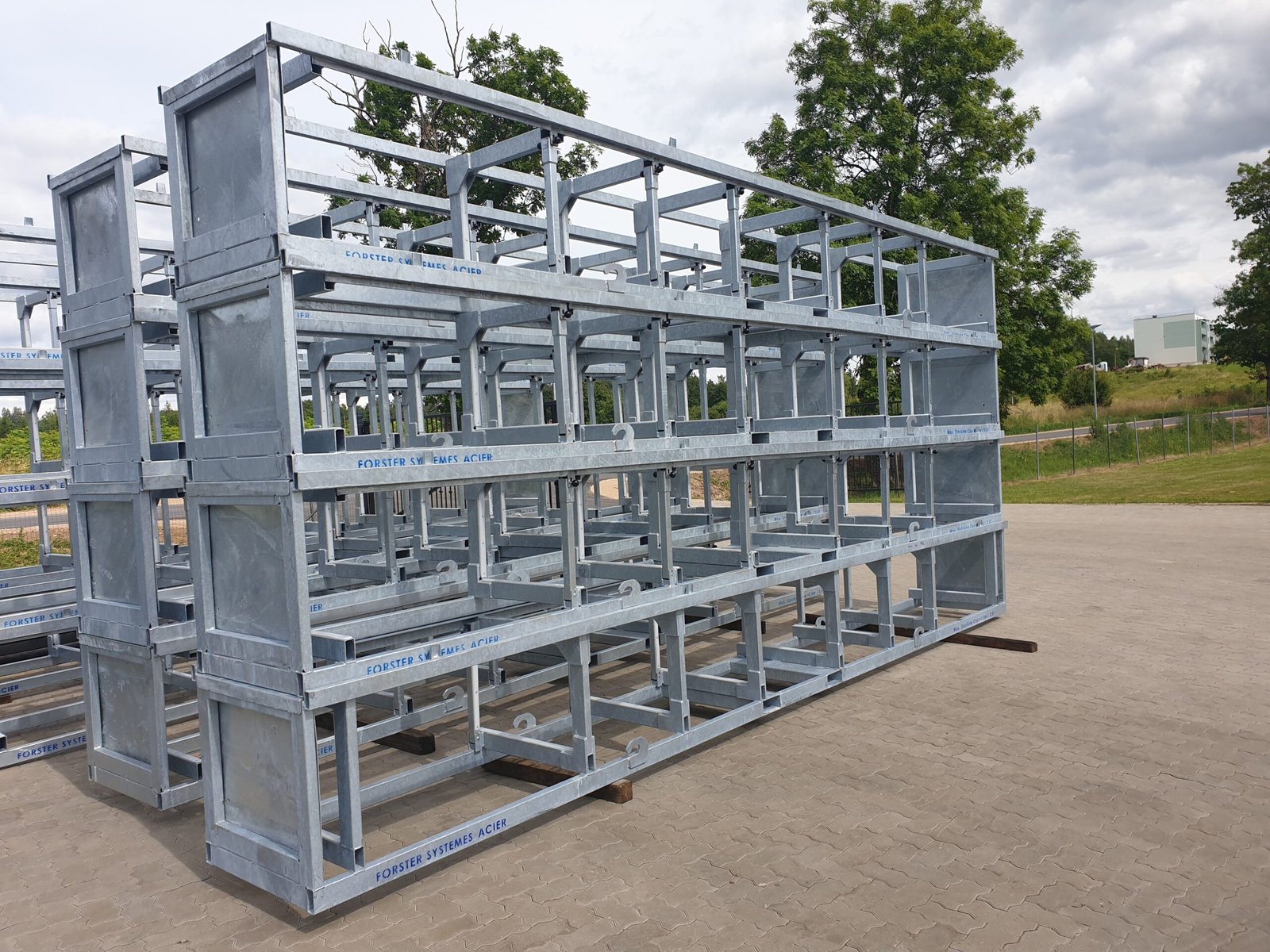
Surface protection selection should be defined at the start of the project, not chosen after fabrication is complete. The coating method can affect weld requirements, dimensional tolerances, and how the structure is assembled. Raise it with the engineering team before drawings are finalised.
Frequently asked questions about steel stillages, lifting frames and load testing
How is Safe Working Load determined for custom steel stillages and lifting frames?
Do steel stillages and transport frames always need load testing?
What is proof load testing for steel lifting structures?
Can custom steel stillages and containers be verified by third-party inspectors?
What factors influence the Safe Working Load of steel stillages and containers?
What industries use custom steel stillages and transport frames?
Conclusion
Safe Working Load testing for custom steel fabrications is not a separate technical add-on. It is part of a broader engineering process that starts with load definition and ends with a structure that can be used with confidence in real operations.
By combining structural design, controlled fabrication, prototype review, and, where needed, proof load testing or third-party inspection, manufacturers can deliver steel stillages, lifting frames, and transport containers that perform reliably under demanding industrial conditions.
If you want the terminology and calculation logic behind the rated load itself, continue with Safe Working Load (SWL): Meaning, Formula, WLL vs SWL and Safety Factors. If you are comparing storage and handling platforms, see also Steel Pallets vs Wooden Pallets.
Planning a custom steel fabrication project?
If you already have technical drawings or CAD files, sharing them can significantly speed up evaluation, feasibility review, and pricing feedback.
- product weight and dimensions;
- lifting method and operating environment;
- stacking and transport requirements;
- target surface protection method;
- drawings, CAD files, or simple sketches.